
You do not have any products added to your quote.
Trouble finding a product?
Contact us.
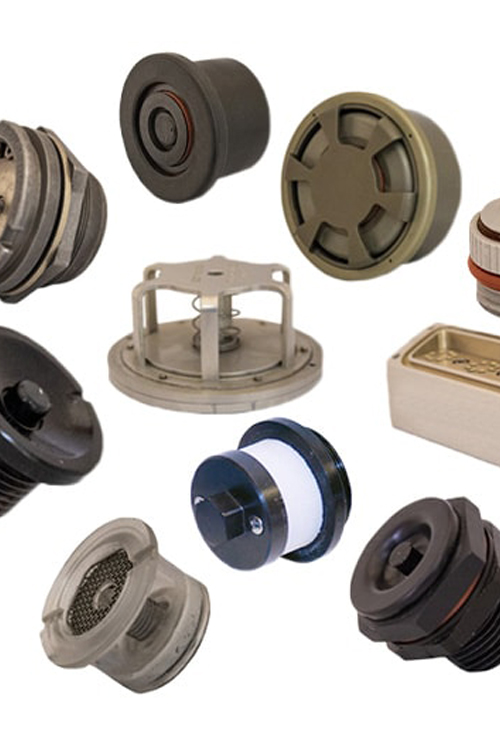
AGM pressure control products are designed to regulate internal pressure and vacuum conditions within sealed containers to prevent deformation, seal failure, and damage caused by pressure differentials during storage and transport.
It’s a lot, we know. If you’re looking for something specific or aren’t sure what you need, try searching through all products or give us a shout and we’ll help!
Pressure differentials caused by temperature or altitude changes can create internal stress within sealed containers. Controlled pressure equalization helps reduce the risk of deformation or structural damage over time.
Unmanaged pressure or vacuum conditions can place stress on seals, increasing the risk of leakage or seal failure. Pressure control supports seal integrity during storage and transport.
Pressure imbalances can draw external air and moisture into sealed containers through compromised seals. Proper pressure control helps reduce the likelihood of moisture ingress that could affect stored contents.
Sensitive or calibrated equipment may be affected by pressure-related stress or environmental changes during storage and transport. Maintaining controlled internal conditions supports equipment protection and conformity requirements.
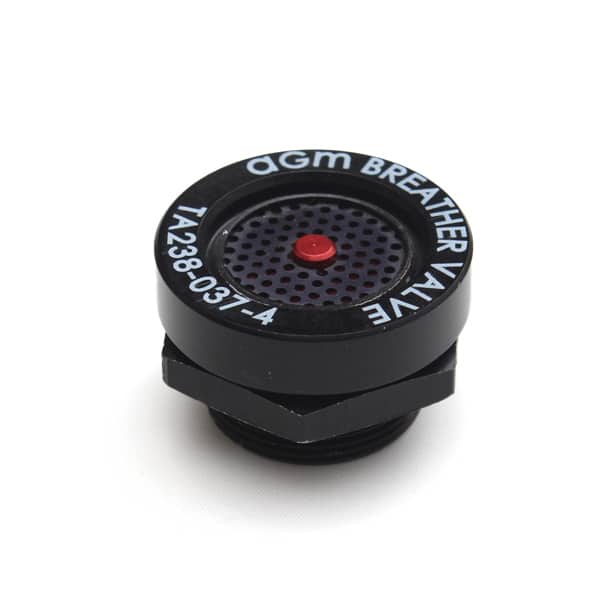
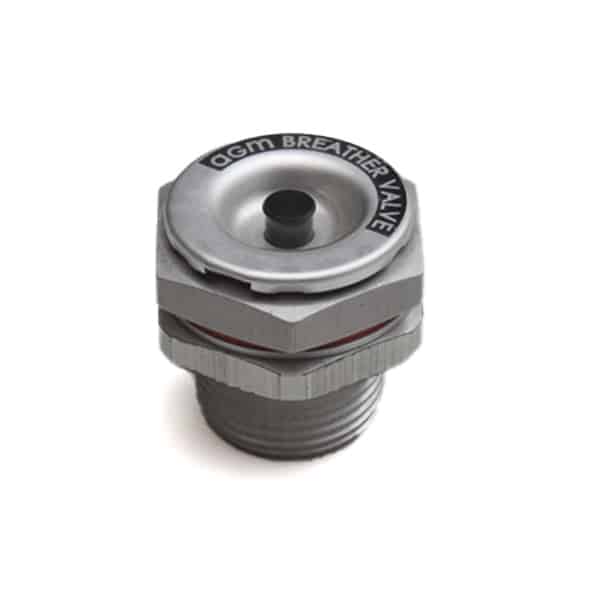
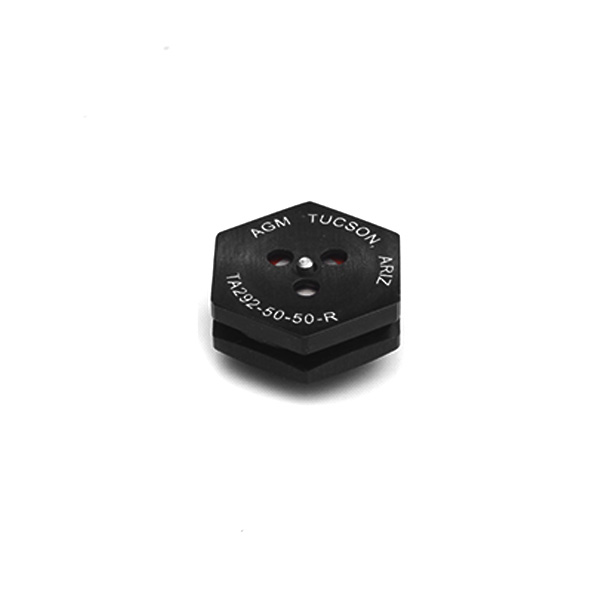
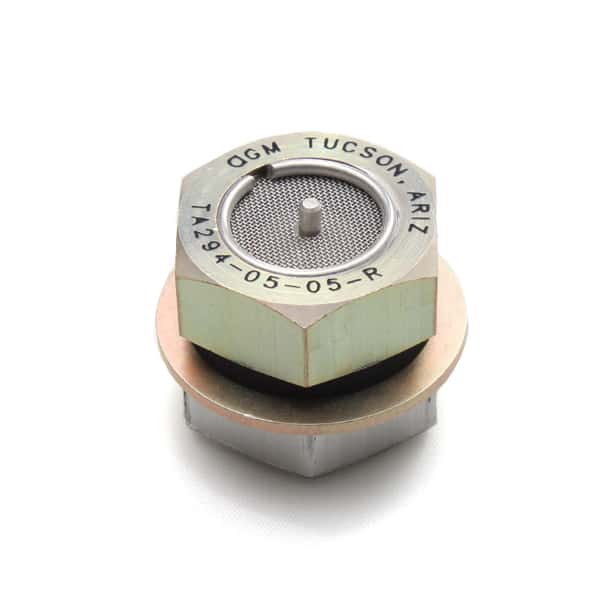
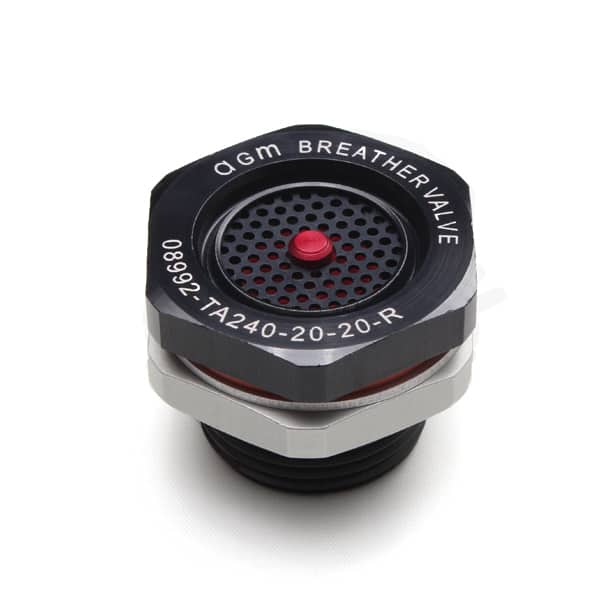
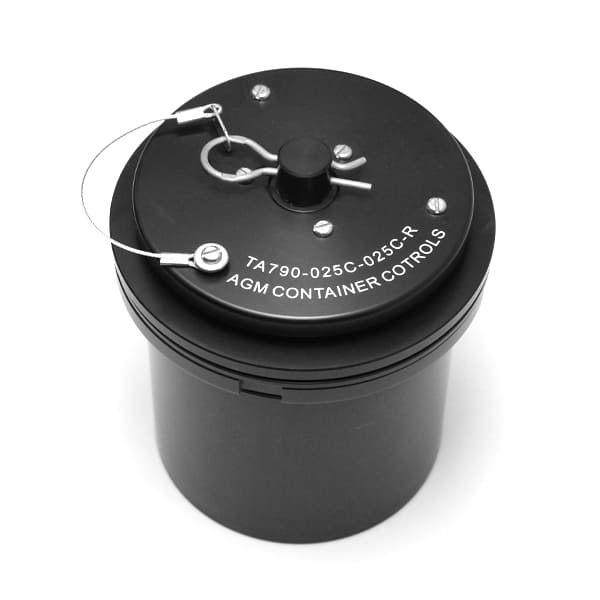
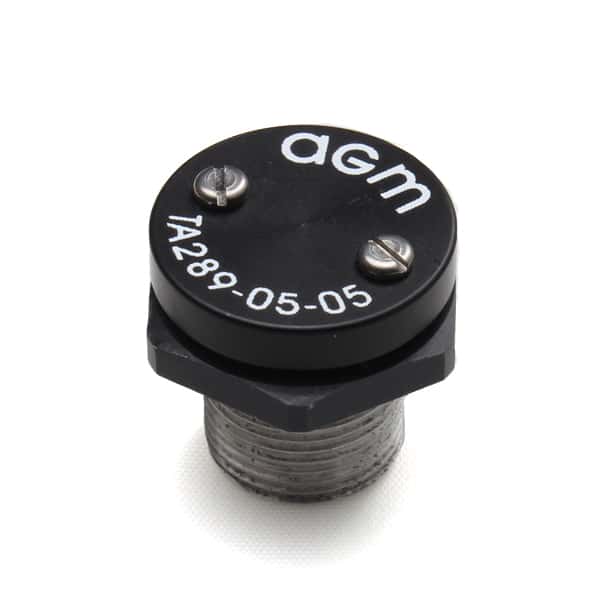
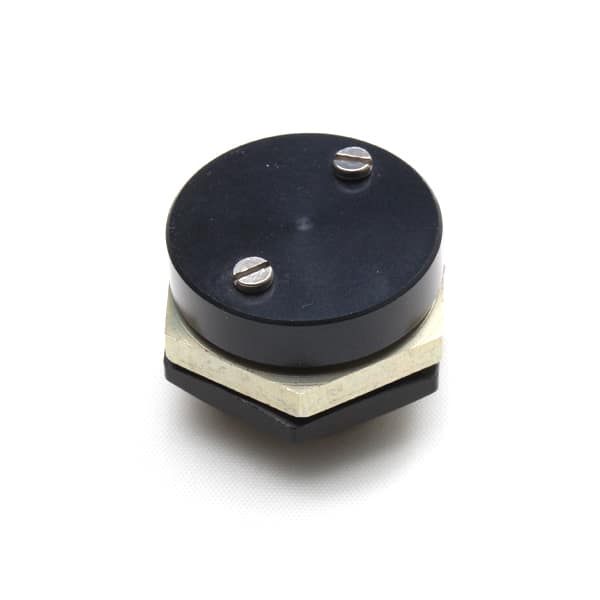
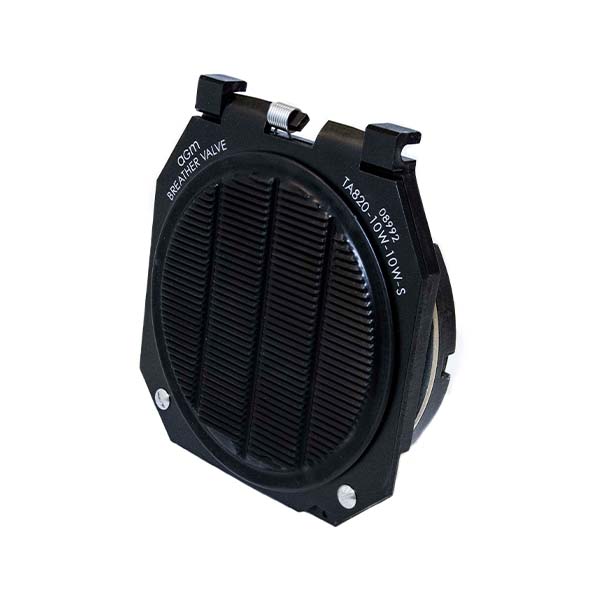
Breather valves are the standard for pressure control. However, there are many different valves, each more appropriate for a specific application, and may include an attached desiccant canister, creating a breathing desiccator, if moisture protection is necessary.
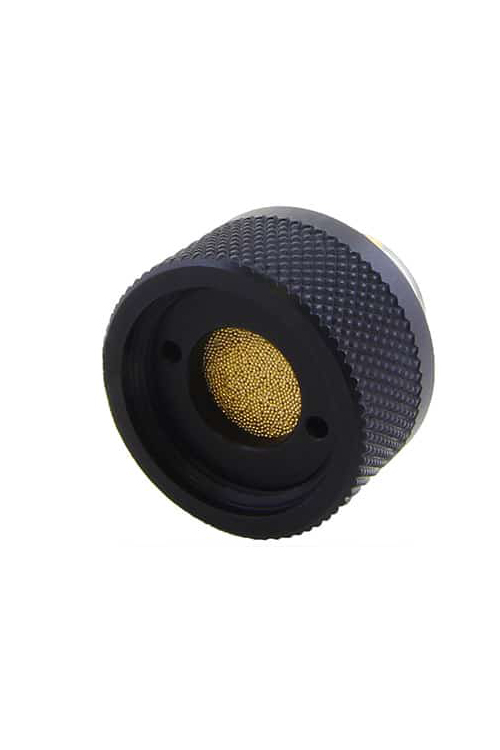
We also carry immersion-proof breathers and filtered vents to help equalize pressure while keeping out liquid water.
Get in touch with our team today for more information about our different pressure solutions.
In order to make an informed decision about the pressure control solution you need, answer for yourself the following questions about your project:
Additionally, familiarization with the definitions of cracking and reseal pressure as they pertain to breather valves will help in decision making.
Proper pressure management, from analysis to hardware installation, is critically important to the longevity of products, shipping containers, and the safety of personnel using them.
Sealing a space is the criteria for the generation of pressure and vacuum differentials. Under the right environmental or use conditions, the sealed space may experience excessive pressure and vacuum differentials, which can lead to the deformation or rupture of the seal. As a result, the item itself may be disabled, or its contents damaged or lost. These situations can be both costly and sometimes harmful.
Ultimately, relieving pressure and vacuum differentials reduces costs.
Managing pressure and vacuum differentials can reduce the thickness of containers and item enclosures since they no longer need to withstand great buildup. As a result, these containers, enclosures, items, etc. require less material to make, which reduces the financial cost of manufacture as well as shipping — since they’re also lighter weight! Repair costs are also minimized as long as deformation or rupture becomes less commonplace or none existent. Lastly, as long as cargo or contents inside of an enclosure remain intact, costs associated with the loss of goods or equipment is minimized.
AGM pressure control solutions are commonly used in the transportation industry on roto-molded cases. These roto-molded cases are frequently used to safely transport and store specific equipment or cargo via air, ship, or road. As a result, they often experience pressure and vacuum fluctuations and may be subject to water exposure (i.e. rain, spilling, high humidity) and submersion.
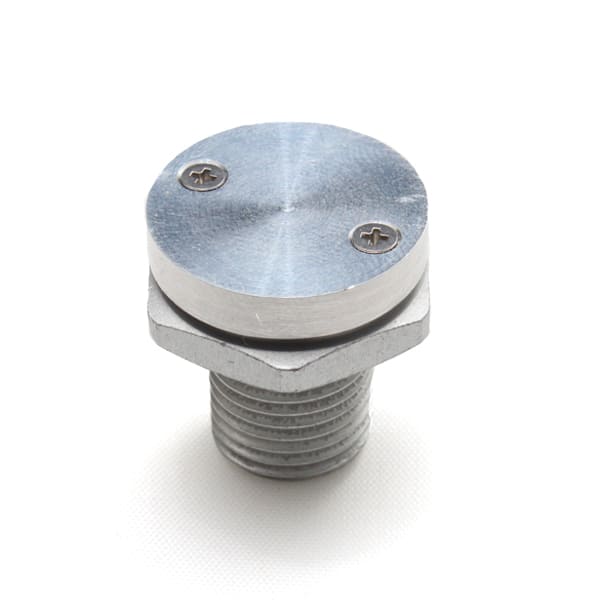
In addition to transport cases, there are also special applications, such as electric vehicle battery packs and large chemical or purification tanks.
There are many different types of pressure control products – immersion breathers, breather valves, burst plates, etc. – and all have their own areas where they excel. The following is a short list of such applications:
AGM pressure control products are used in sealed containers supporting long-term storage applications, where controlled pressure equalization is required to maintain container integrity and prevent seal degradation caused by temperature-driven pressure changes. These solutions support consistent storage conditions for equipment subject to quality and compliance requirements.
AGM pressure control solutions are applied in sealed containers during transportation scenarios involving altitude and environmental changes, allowing pressure equalization while preserving container integrity. These solutions help mitigate risks associated with pressure differentials during handling and transport in regulated supply chains.
AGM pressure control products are used in sealed containers housing sensitive or calibrated equipment, where pressure imbalances during storage or transport could impact performance or conformity. Controlled pressure management supports equipment protection requirements within quality-managed environments.
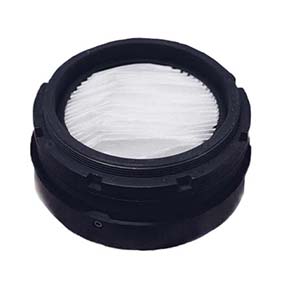
No, opening and closing pressure are not the same. In most breather valves, a spring pushes a seal onto a seat. Due to the surface energy forces of the elastomeric seals, these breather valves require slightly more force to open than to close. Therefore, the opening pressure (cracking pressure) is slightly higher than the reseal pressure. Also, the higher the setting of the valve, the greater the difference between the opening and closing pressures.
Click here for more information on Breather Valves and how they work.
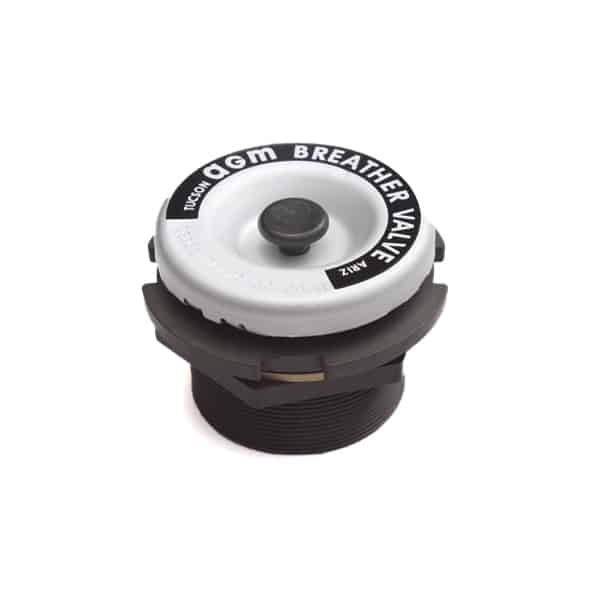
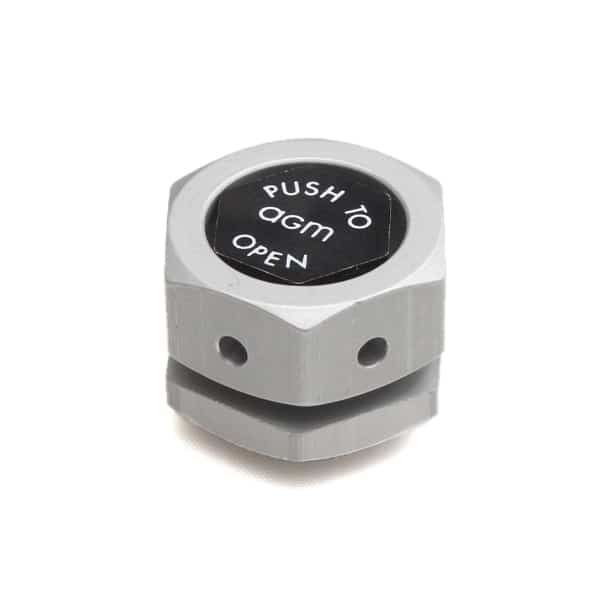
Yes, but valves with a manual release button can also be opened manually to equalize pressure.
No, not unless you push the manual release button (only on those valves that have a manual release button). In automatic mode, they will equalize only to the level of the reseal pressure. For example, a TA333-05-05-R breather valve will only equalize to within 0.5 psid because below that the valve will be closed.
It depends. There are three common ways that liquid water can enter through a breather valve: submersion in water, directed streams of water (washdowns), and wind-driven rain.
For submersion, the valve will not open if the reseal pressure of the valve exceeds the hydrostatic pressure of the water plus any vacuum that has built up inside the container. For instance, at a water depth of one meter, the hydrostatic pressure is approximately 1.4 psi. Therefore, a valve with a reseal pressure of at least 1.5 psid will prevent water intrusion at a depth of one meter, subject to the following qualification. If the container has developed a vacuum due to a temperature change, or due to a pressure change from land or air transport, the valve could still inhale water. For example, a container with a vacuum of 0.5 psi that is submerged in water until its breather valve is one meter deep will need a valve with a reseal pressure of at least 2.0 psid, because it needs to withstand 0.5 psi vacuum plus 1.4 psi hydrostatic pressure.
Note that submerging a warm container in cold water will develop a vacuum inside the container. If your container is subject to this condition, contact an AGM engineer for assistance in calculating its effect on your container.
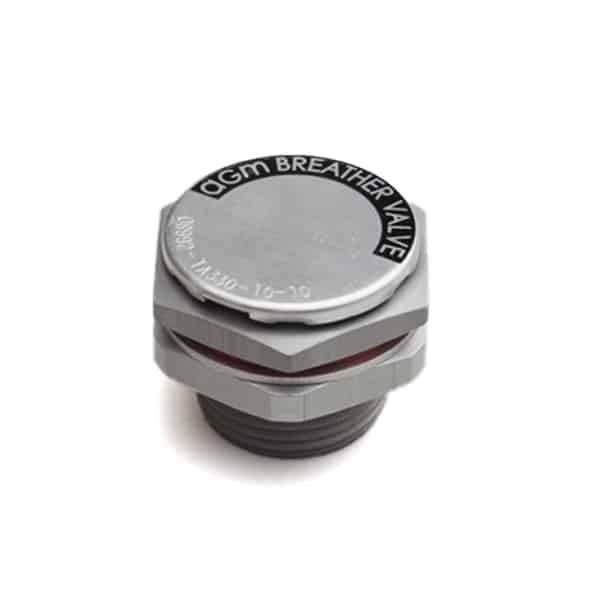
For a valve subjected to a washdown, the breather valve’s cover configuration and vacuum setting determines whether it is susceptible to water ingress. An AGM breather valve with a solid cover and a nominal cracking pressure in the vacuum direction (i.e., the inward flow direction) of at least 1.0 psid will repel water entry from a directed stream of water. AGM valves with a solid cover include the following: TA333-R, TA330, TA770-R, and TA225. On the other hand, valves without a solid cover, such as TA238-R, TA240-R, TA292-R, and TA294-R valves, as well as competitors’ valves with only a screen over the valve opening, could allow water from a directed stream of water to enter during a container washdown.
Finally, for the condition of wind-driven rain, an AGM breather valve with a solid cover will repel wind-driven rain even when the valve is inhaling. AGM’s unique cover design forces the airstream through two 180° turns, thereby causing most water droplets to fall out of the air stream. By contrast, a breather valve without a solid cover will repel wind-driven rain only when the valve is closed. This type of valve could allow rain to enter during the brief instances when the valve is inhaling.
Note that the passage of liquid water through a valve is only one of the two ways that moisture commonly enters a container. The more common way for moisture to enter a container is in the form of water vapor, which is entrained in the air that the valve inhales, and also permeates through a container’s seals.
Contact an AGM engineer for assistance in determining how to protect your container’s contents against this type of water ingress.
We have made valves with reseal pressures as high as 10 psid. However, these valves are difficult to work with and the settings may shift after long periods of time and large temperature changes, but they will continue to perform their basic function.
It’s a lot, we know. If you’re looking for something specific or aren’t sure what you need, try searching through all products or give us a shout and we’ll help!